

For A Lady I Know

Whether you're having surgery, undergoing tests or accept other medical needs involving your bladder, your doctor may need to insert a catheter to assistance in your diagnosis or handling processes. A catheter is a device that's inserted into your bladder to drain urine out of your body then it tin so be collected for testing or disposed of. If you or a loved 1 need to undergo catheterization, learning more nearly what's involved, forth with another of import information related to catheterization for women, can help you experience more than confident about and better prepared for the procedure.
Catheters are elementary devices; one of the most common, chosen a Foley catheter, consists of a hollow tube, a small balloon, a port and a drainage bag. The small-scale balloon is situated on one end of the tube. This terminate is inserted upwards through a patient's urethra — which is the modest channel that moves urine from the bladder to the outside of a person's body — and into her bladder. The airship is then inflated with sterile water, which holds the catheter tube in identify and prevents leakage. The port section splits the inserted portion of the tube into 2 divide tubes, i of which directs urine into the drainage pocketbook. The other tube section allows for inflation and deflation of the balloon.
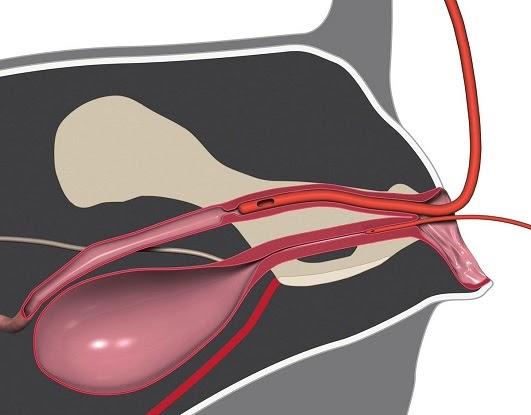
A Foley catheter is a type of indwelling catheter. "Indwelling" means that the catheter remains within the urethra and bladder for a brusk or long menstruation of fourth dimension, such as days or weeks, without removal. These types of catheters are generally used for managing long-term health conditions, such every bit urinary incontinence or an disability to urinate. Doctors also typically use indwelling catheters for people who are bedridden or unconscious due to atmospheric condition like a coma or because they're nether general anesthesia.
Another type of catheter insertion is called make clean intermittent catheterization, or CIC. In this type of catheterization, the catheter doesn't remain in the bladder and urethra and it also doesn't accept a balloon on the end. Instead, the catheter tube is inserted briefly — just long enough for the patient's bladder to drain — and and then removed immediately. Medical professionals may perform CIC to obtain sterile urine samples from patients who take trouble urinating or to measure a person's urine output. Women who've had sure gynecologic surgeries may likewise opt to perform CIC on themselves if they're unable to empty their bladders following those procedures.
How Do Doctors Insert Catheters?
The method of insertion for a catheter depends on the type of catheterization that yous demand. If you're having an indwelling catheter placed, during your appointment you'll remove clothing from the lower half of your torso. You'll demand to lie flat, curve your knees and spread your legs so the clinician tin access your urethra. They'll so divide your labia to clean your urethral opening and the area effectually it. Post-obit this, the clinician volition use a smoothen-tipped syringe to inject a small amount of lubricant into your urethra. This makes it easier for the catheter tubing to slide up to your bladder.

In one case this prepping is consummate, the clinician will begin gently sliding the clean catheter upwards through your urethra until it reaches your float and urine begins flowing out. They'll inflate the balloon to hold the catheter in place and, if they haven't yet, attach the drainage bag to the open end of the catheter tubing. You'll wear and empty this bag (or replacement numberless) until you have the catheter removed. Most people who wear indwelling catheters secure the bags to their legs so gravity helps the urine reach and stay in the handbag. If yous're having the catheter inserted for surgery, the doctor may wait until you're already under anesthesia to place the device.
The procedure for placing an intermittent catheter is similar to that for the indwelling catheter. A clinician cleans around your urethra and lubricates it before placing the catheter tubing. After this, they can collect a urine sample and remove the catheter tubing. People besides self-catheterize using CIC if they're unable to void urine on their own or if they demand to track their urine output for medical reasons. The process and the position your torso is in may be somewhat dissimilar if you utilise CIC at dwelling — some people sit on the toilet and perform CIC to drain their urine — and your doctor can show y'all the proper technique to utilise in this situation.
Are There Any Risks With Catheterization?
Catheterization is a relatively simple procedure — and one that's mutual — simply in that location are a few risks associated with having a catheter inserted. A urinary tract infection (UTI) is the about common problem for people who have indwelling catheters, co-ordinate to the U.S. National Library of Medicine. This can happen if the catheter isn't sterilized properly before insertion. If leaner remain on the catheter when it'south placed into your bladder, this can introduce the bacteria into your float, where they begin multiplying — resulting in infection.

After you've had an indwelling catheter placed, it's important to be on the lookout for changes in your urine'due south olfactory property, amount and advent. With a UTI, you might notice that your urine smells bad or has a much stronger odour than usual. Your urine might also look cloudy or thick, and you may observe blood in it. The amount of urine collecting in the drainage bag may lessen even when you're still drinking fluids.
Other UTI signs and symptoms to look out for include a fever, pain in your abdomen or lower back, chills, aches, discharge leaking around your urethra where the tube comes out and general fatigue. If you observe any of these symptoms later on your catheter insertion, call your md immediately. They can remove the catheter and give you lot antibiotics to aid clear up the infection.
Insertion of a catheter can likewise cause damage to your urethra and to your bladder. Although it's very rare, sometimes a catheter tube can puncture a person's bladder wall. If you take any questions or concerns about using or maintaining your catheter — or if you're experiencing pain after having information technology placed — don't hesitate to call your doctor for assistance.
Resource Links:
https://medlineplus.gov/ency/article/003981.htm
https://www.hcd.com/urology/foley-catheter/
https://medlineplus.gov/ency/patientinstructions/000140.htm
https://www.med.uottawa.ca/procedures/ucath/
https://www.cdc.gov/hai/pdfs/uti/CA-UTI_tagged.pdf
https://medlineplus.gov/ency/commodity/000483.htm
https://www.ncbi.nlm.nih.gov/pmc/manufactures/PMC2865895/

For A Lady I Know,
Source: https://www.thehealthfeed.com/procedures-and-tests/catheterization-for-women?utm_content=params%3Ao%3D1668962%26ad%3DdirN%26qo%3DserpIndex&ueid=27ce3c10-f09e-4571-9b60-88a175c35490
Posted by: robinsonwitilly.blogspot.com
0 Response to "For A Lady I Know"
Post a Comment